
BeyondWheels International Workshop in Málaga: three days of collaboration, learning and project development

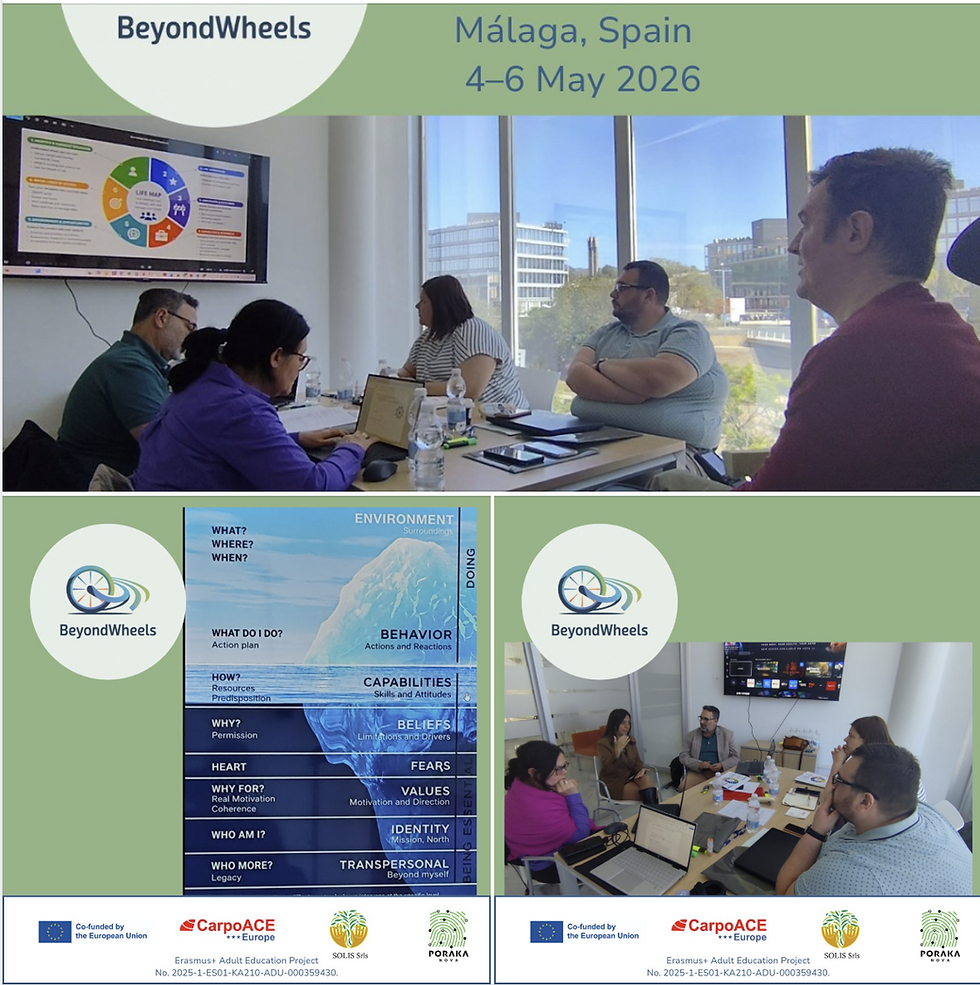
From 3 to 5 May 2026, the BeyondWheels Project held its International Workshop in Málaga, Spain, bringing together the project partners CarpoACE Europe, Poraka Nova and SOLIS Srls for three intensive days of work, exchange and joint planning.
The workshop took place at BIC Euronova, Málaga TechPark, and represented an important milestone in the development of the BeyondWheels Method: an innovative approach designed to support adults with locomotor disabilities in building employability projects aligned with their personal aspirations, skills and potential.
Advancing the BeyondWheels Method
During the first day, partners focused on the presentation, discussion and refinement of the latest version of the BeyondWheels Method. This session, led by CarpoACE Europe, allowed the consortium to review the methodological structure, exchange feedback and identify the adjustments needed to strengthen its practical application.
The workshop also included a training session led by Poraka Nova on the skills and knowledge required to work effectively with adults with locomotor disabilities. Partners reflected on good practices, as well as on the legal and ethical aspects that need to be considered when developing inclusive training and coaching pathways.
Another key contribution focused on online facilitation techniques for training and coaching, led by SOLIS Srls. This session supported the partners in exploring how digital environments can be used to create accessible, participatory and effective learning experiences.
The first day also included a discussion on the didactic contents of the future Training of Trainers, which will play an important role in transferring the BeyondWheels Method to professionals and organisations working in the field of adult education, inclusion and employability.
Developing the Method Guide and the online educational platform
On the second day, the consortium continued working on the final adjustments of the BeyondWheels Method and discussed the draft structure of the Method Guide. This guide will be one of the core outputs of the project and will provide practical support for professionals working with adults with locomotor disabilities.
Partners also worked on the structure and contents of the online educational platform, discussing how to organise the learning materials and ensure that the platform is accessible, useful and coherent with the project’s objectives.
The team also explored ideas for the Online International Workshop, planned for June 2026, and discussed dissemination strategies to involve local stakeholders, increase the visibility of the project and strengthen its impact at local and European level.
Strengthening cooperation and defining the next steps
The third day was dedicated to the Transnational Project Meeting, the final conclusions of the workshop and the definition of the next steps. Partners reviewed the key topics addressed during the previous two days and consolidated the decisions taken throughout the workshop.
The meeting closed with a shared roadmap for the next phases of the project, including the further development of the Method Guide, the online educational platform, dissemination activities and the preparation of future training and international exchange activities.
Beyond the working sessions, the workshop also offered valuable opportunities to strengthen the partnership. Shared meals, informal exchanges and walks through the historic centre of Málaga contributed to building trust, reinforcing cooperation and creating a stronger team spirit among the partners.
Looking ahead
The Málaga International Workshop, held from 3 to 5 May 2026, marked an important step forward for the BeyondWheels Project. After three productive days, the consortium left Málaga with a stronger method, clearer decisions, a shared work plan and renewed motivation.
The project continues moving forward with a common commitment: to develop tools and methodologies that can make a real contribution to the inclusion, employability and autonomy of adults with locomotor disabilities.


Comments